When the usual tools don’t quite fit.
You can often get a business a long way with spreadsheets, forms, and subscription tools. The friction starts when people have to copy the same information into several places, customers cannot see what is happening, or a workflow depends on one person remembering every step.
A custom web application gives that work a shared home. PharettaLabs helps small and midsize businesses identify the useful first version, design the experience, and build the application and backend together.
- Customer portals for requests, documents, and progress updates.
- Internal tools for intake, assignments, records, and approvals.
- Customer-facing products with accounts, search, dashboards, or AI-assisted features.
Start with the work that matters most.
We begin with the users, the current process, and what a successful change would look like. Then we choose one coherent workflow to make useful from beginning to end. A short feature list can still require careful engineering; a clear scope makes those tradeoffs visible.
Depending on the project, the work can include interface design, authentication, data modeling, application development, integrations, testing, deployment, and handoff. Access permissions and handling of sensitive information are part of discovery, so the design reflects how the business actually operates.
Built from experience operating real products.
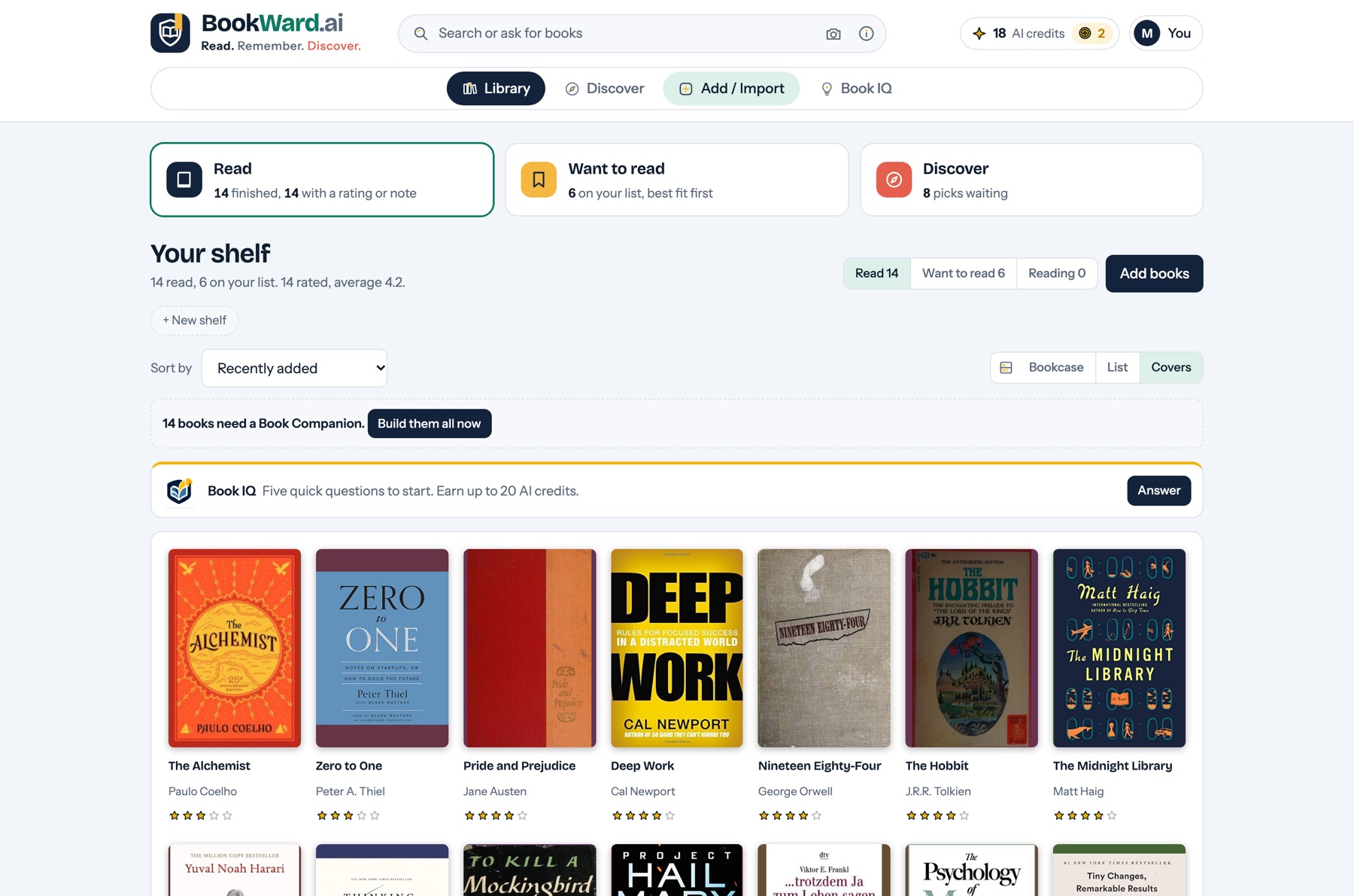
BookWard brings together user accounts, a searchable book catalog, personalized recommendations, and imports from messy source material. Punch List connects shared household tasks with photos, email, and planning. Second Summit combines career tools into a guided experience.
These are products John created and operates. They show the kinds of systems we can bring together; your application would have its own users, requirements, and scope.
A focused build, with a plan beyond launch.
Build engagements start at $10,000. A $15,000–$30,000 budget is a useful planning range for a focused project, with final pricing based on discovery and agreed deliverables. Large migrations, unusual integrations, and extensive mobile or compliance requirements can change the scope substantially.
We agree how launch, source code and account handoff, hosting management, maintenance, and future development will be handled. Ongoing work is scoped separately.
See what a focused software budget can cover →A few useful questions.
Can the application work on phones?
Yes. We design responsive web applications for mobile use. If the workflow needs an installed iOS or Android application or specific device capabilities, we assess that as part of the scope.
Do I need a finished specification?
No. Bring the problem, examples of the current process, and any constraints. Discovery turns those into priorities and an agreed plan.
Can you work with existing software?
Often, through available APIs, exports, or other supported integration methods. We review access, documentation, and limitations before promising a connection.