Reading the message is only the beginning.
The work comes afterward: identify the request, find the date, save the attachment, enter the details, and tell someone what to do. When that happens repeatedly, the inbox becomes a queue that the rest of the business cannot easily see.
A focused workflow can bring that information into a shared system. Depending on the need, it may use email forwarding, an upload form, photo capture, document processing, or a supported connection to an existing business tool.
Make each step visible.
| Step | What to define |
|---|---|
| Capture | Which sources are accepted, which files are supported, and who can submit them. |
| Extract | Which fields matter, how missing information is handled, and what the source says. |
| Review | Who checks uncertain or consequential details before an action is taken. |
| Route | Which record or task is created, who owns it, and how duplicates or failures are handled. |
Not every step needs AI. Rules can handle predictable formats; AI can help interpret variation. A person should have a clear way to check and correct the result where mistakes would matter.
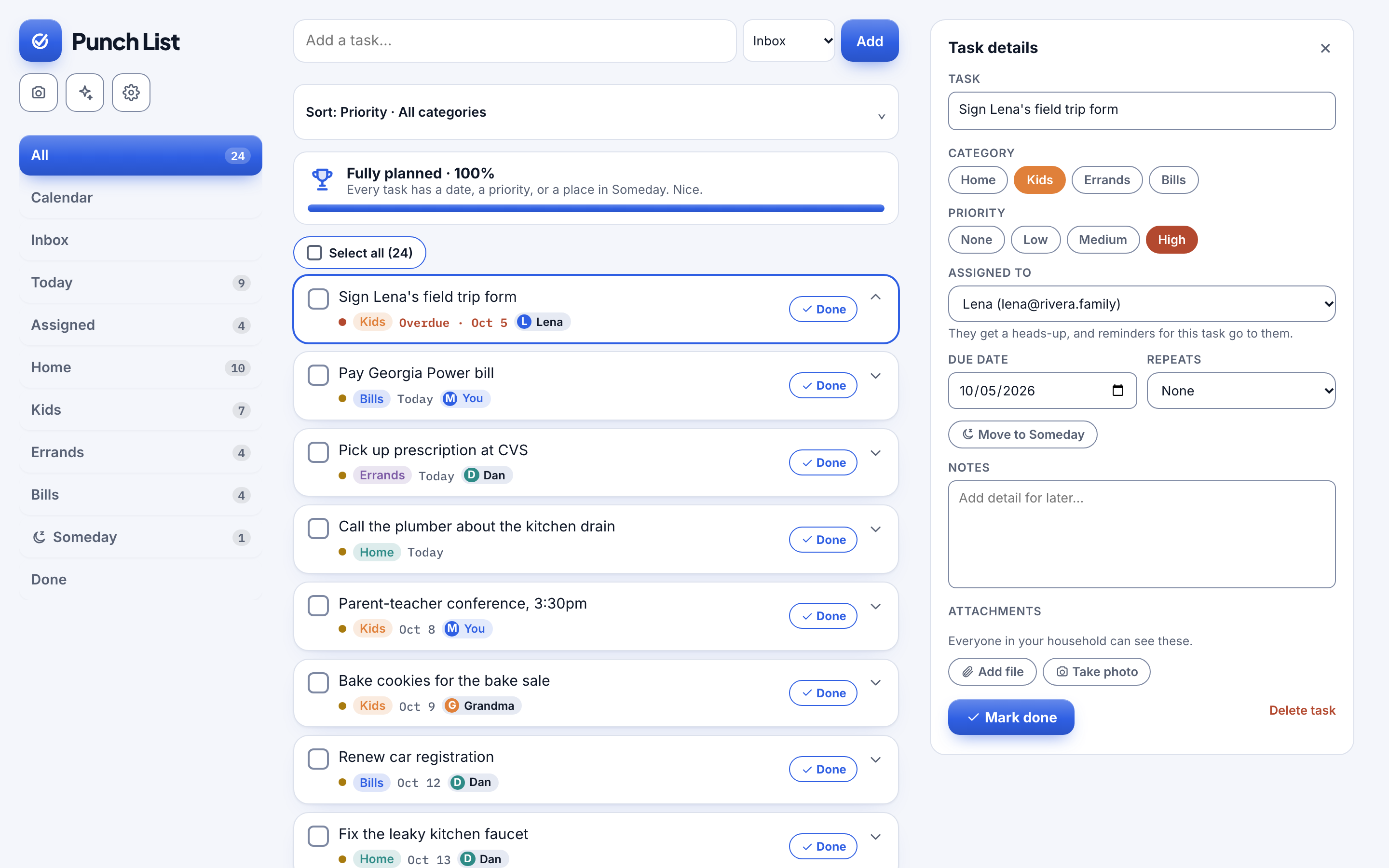
A pattern already in use in Punch List.
Punch List accepts forwarded emails at a user-specific address and processes them into household tasks with due dates, priorities, and attachments. Its scan-to-tasks feature turns a photographed note or document into proposed tasks that people review before adding.
That product demonstrates the capture-to-action pattern. A business version would need its own data rules, permissions, review experience, and destination integrations.
See how Punch List brings everyday tasks together →Choose the boundaries before adding automation.
Discovery should establish which information can be processed, where it is stored, who can see it, and how long it needs to be kept. If documents include sensitive or regulated information, the requirements and technical fit need to be assessed before a build is agreed.
We also define the exception path. A file that cannot be read, a date that is ambiguous, or an unavailable destination should become a visible item to resolve. It should not quietly disappear.
Start with one kind of incoming work.
Choose a repeated document or email type, its destination, and the fields a person currently copies. Review a redacted set of representative examples, including the awkward ones. That gives us a practical basis for assessing feasibility and defining a first version.
Build engagements start at $10,000. The volume, file types, integrations, review interface, and ongoing provider costs all affect scope.
Explore automation and integration services →